

You may notice it while reading, looking at your phone, or covering one eye: one side looks clear, while the other seems out of focus. Blurry vision in one eye can have several causes, from a change in your prescription to a condition that needs immediate medical attention.
How quickly the change developed and whether you have other symptoms help determine how urgently you need care. A sudden change deserves immediate attention, even if your eye does not hurt.
At Alice Family Eye Center in Alice, Texas, we evaluate both your vision and your eye health to identify what is causing the difference and recommend the appropriate care.
Sudden Blurry Vision in One Eye Needs Immediate Attention
If your vision suddenly becomes blurry, seek an immediate eye evaluation. Do not wait for a routine appointment or assume the problem will resolve on its own.
Call our office and clearly explain that your vision changed suddenly. If we cannot arrange an immediate evaluation, or our office is closed, go to an emergency department.
Seek emergency care right away if you experience:
- A sudden loss of vision, darkening, or a missing area of vision.
- A curtain or shadow moving across your sight, especially with new flashes or floaters.
- Severe eye pain with blurred vision, particularly if you also notice redness, glowing rings around lights, nausea, or vomiting.
- Blurred vision following an eye injury.
Call 911 if a sudden vision change occurs with facial drooping, weakness or numbness on one side, difficulty speaking, confusion, trouble walking, or a sudden severe headache. These can be signs of a stroke. Do not drive yourself.
Sudden symptoms still need evaluation if they improve or disappear. Tell the medical team when the change began and how long it lasted.
Why Would Only One Eye Be Blurry?
Although your eyes work together, each eye has its own focusing system, tear film, lens, and retina. A change affecting one eye may leave the other seeing clearly. Sometimes your clearer eye compensates, so you only notice the difference when you cover it.
Prescription Changes
One eye may be more nearsighted or farsighted than the other, or have more astigmatism. If your prescription changes in just one eye, your current glasses or contacts may still work well for the other eye while leaving the affected eye out of focus.
The National Eye Institute explains that refractive errors occur when the eye does not focus light correctly on the retina. During an examination, we test each eye separately to determine whether a difference in prescription explains the blurriness.
Dry Eye
Dry eye does not always affect both eyes equally. Differences in eyelid function, tear production, or how quickly tears evaporate can leave one eye with a less stable tear film.
Because tears help create a smooth surface for focusing light, an uneven tear film can make that eye’s vision fluctuate. You might notice temporary improvement after blinking, along with burning, grittiness, or watering. However, improvement after blinking does not rule out another cause.
Cataracts
Each eye has its own lens, and a cataract forms when that lens becomes cloudy. Cataracts often affect both eyes eventually, but they do not necessarily develop at the same time or progress at the same rate.
If the lens in one eye is cloudier, vision through that eye may look blurrier, dimmer, or less colorful while the other eye still sees relatively clearly. This difference usually develops gradually.
Corneal Problems
The cornea is the clear front surface of the eye. A scratch, infection, or other problem involving one cornea can blur vision on that side while the other eye remains clear.
Pain, redness, light sensitivity, or the feeling that something is in the eye may accompany the blurriness. These symptoms need prompt evaluation, especially if you wear contact lenses.
Retinal and Optic Nerve Conditions
Each eye has its own retina and optic nerve. A retinal tear or detachment, a blocked retinal blood vessel, or inflammation of an optic nerve may affect one eye without affecting the other.
Depending on the cause, you might notice overall blurriness, a dark or missing area, distorted vision, or a change in how colors look. Sudden changes, even without pain, require immediate evaluation.
What If You Also Have a Headache?
Blurry vision in one eye and a headache should be evaluated based on how the symptoms began and how severe they are.
A focusing problem can contribute to headaches and eye strain. However, a headache does not automatically mean your vision change is caused by tired eyes or a need for new glasses.
A sudden vision change needs immediate evaluation. Severe eye pain with blurred vision, especially with glowing rings around lights, nausea, or vomiting, requires emergency care. Call 911 if the vision change accompanies a sudden severe headache or any of the stroke symptoms listed above.
What If the Blurriness Affects Your Side Vision?
Blurry peripheral vision in one eye means the change seems to affect the edge of your view rather than what you are looking at directly.
Tell us whether that area looks out of focus, dark, shadowed, or missing. A new curtain or shadow, particularly with flashes or a sudden increase in floaters, can be a warning sign of retinal detachment and requires immediate care.
The National Eye Institute explains why these retinal detachment symptoms need urgent treatment.
How We Find the Cause of Blurry Vision
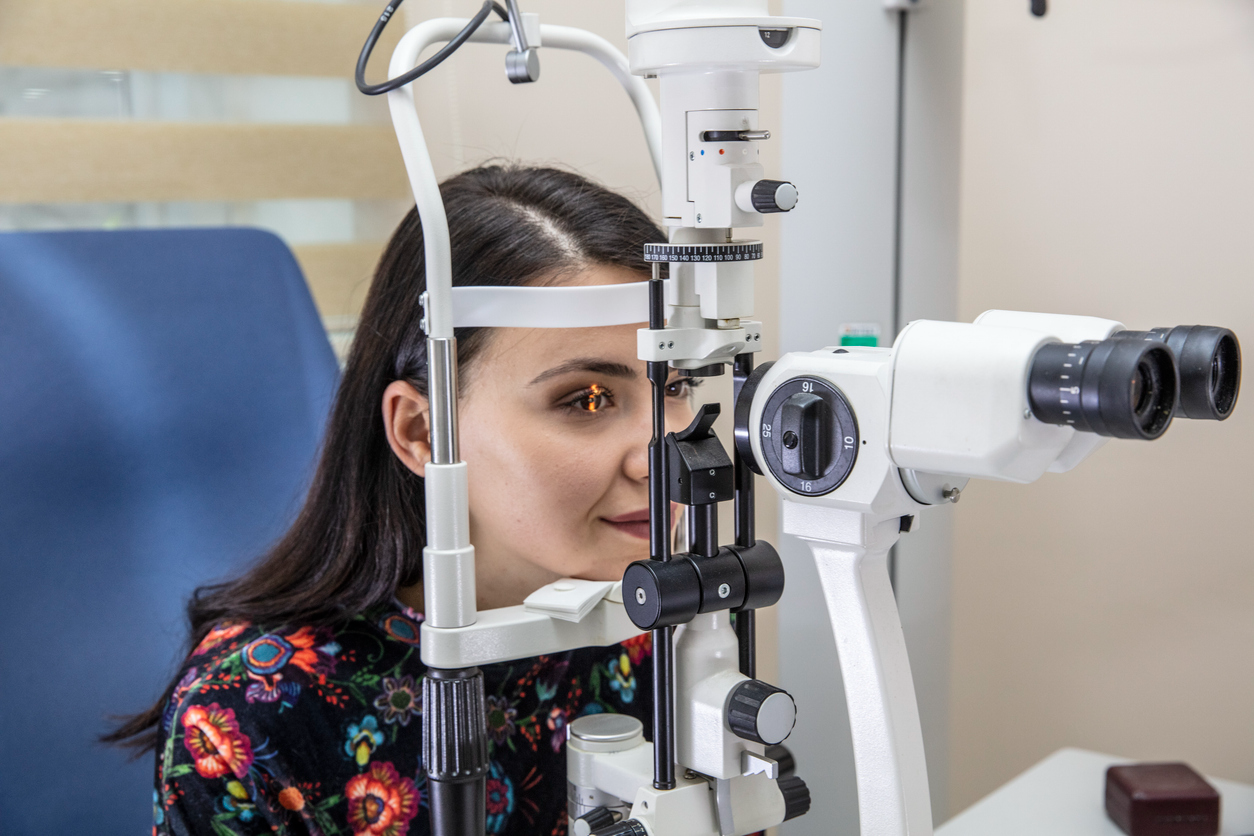
During your visit, we will ask when the blurriness began, whether it is constant or comes and goes, and whether you have pain, headaches, flashes, floaters, or other symptoms.
Our comprehensive eye exams assess both your vision and your eye health. We check your prescription, examine the eye’s surface, measure eye pressure, and examine the retina. Your symptoms and examination findings help us determine whether additional testing is needed.
Alice Family Eye Center also uses diagnostic equipment, including retinal photography and visual field testing, to help evaluate eye health. We will recommend appropriate testing and explain whether you need a prescription change, treatment, monitoring, or referral to a specialist.
Let Us Help You Find the Cause
If you have noticed gradual or persistent blurry vision in one eye, call Alice Family Eye Center at (361) 668-3937 to arrange an evaluation. Explain what has changed so our team can help determine how soon you should be seen.
If the change is sudden, seek immediate care as outlined above. Getting the cause identified is the first step toward protecting your vision and finding the right treatment.