

Have you ever noticed a small speck or squiggly line drifting across your vision, only to have it move away when you try to look directly at it? Or perhaps you have seen a brief flash of light at the side of your vision even though there was no obvious source of light around you.
These changes can be surprising, especially when they appear for the first time. Floaters are common and often become more noticeable as we get older. Flashes of light in vision can also occur as the eye changes with age. However, new or sudden flashes and floaters can sometimes be warning signs of a problem involving the retina.
At Alice Family Eye Center, we want our patients to understand the difference between vision changes that are commonly associated with aging and symptoms that need prompt attention.
What Are Floaters in Vision?
Floaters are small shapes that seem to move through your field of vision. You might describe them as:
- Small dots or specks
- Squiggly or wavy lines
- Threads
- Rings
- Cobweb-like shapes
They are often easier to see when you are looking at a bright, plain background, such as a blue sky, white wall, or computer screen.
Although floaters appear to be in front of your eye, they actually originate inside it. The inside of the eye contains a clear, gel-like substance called the vitreous. As we age, the vitreous gradually changes. Tiny fibers within it can clump together and cast shadows on the retina, the light-sensitive tissue at the back of the eye. You see those shadows as floaters.
The National Eye Institute explains that floaters are common and often do not require treatment. However, when floaters appear and whether they are accompanied by other symptoms can make an important difference.
What Causes Flashes of Light in Vision?
Flashes are different from floaters. Instead of seeing a spot or strand drifting across your vision, you may notice what looks like a brief flash, flicker, spark, or streak of light.
Sometimes flashes occur because the vitreous inside the eye is pulling or tugging on the retina.
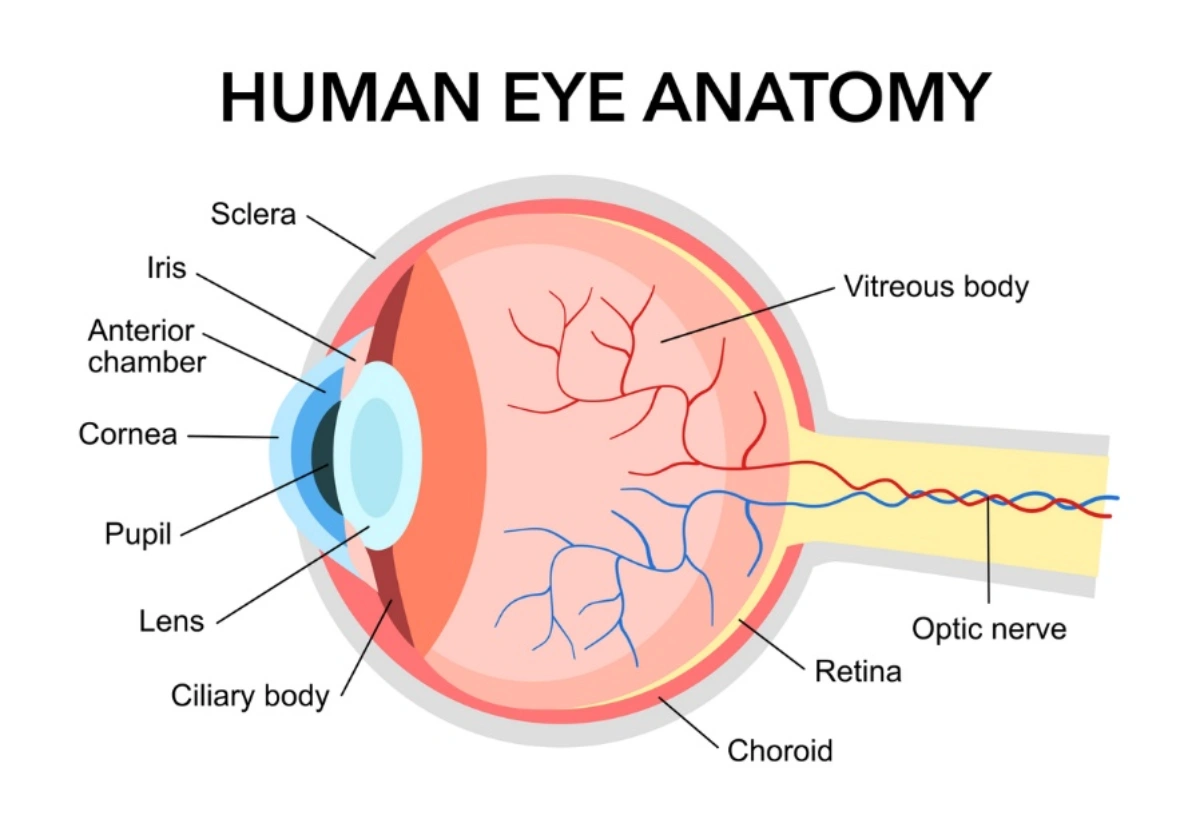
As the vitreous becomes more liquid with age, it can eventually separate from the retina. This is known as a posterior vitreous detachment, or PVD. It becomes more common as people get older and often occurs without causing a serious problem.
A PVD can cause new floaters, flashes of light in your vision, or both.
The important concern is that as the vitreous pulls away, it can sometimes create a tear in the retina. Fluid can then pass through the tear and cause the retina to separate from the tissue beneath it, resulting in a retinal detachment.
That is why a sudden change in flashes or floaters deserves attention.
Flashes and Floaters: When a Change Is More Concerning
Having a few longstanding floaters is different from suddenly seeing numerous new ones.
Contact an eye care provider promptly if you experience:
- A sudden increase in floaters or many new floaters appearing at once
- New or repeated flashes of light
- Flashes and new floaters occurring together
- A dark shadow in your vision
- A curtain-like area moving across your field of vision
- Sudden loss or reduction of vision
A retinal detachment is a medical emergency because delaying treatment can increase the risk of permanent vision loss.
Do not wait for these symptoms to improve on their own or until your next routine eye exam. Seek immediate eye care.
Why a Dilated Eye Exam Is Important

You cannot tell by looking in the mirror whether flashes or floaters are related to normal changes within the eye or a problem with the retina.
A dilated eye examination allows us to look through the pupil and examine the structures at the back of your eye, including the retina. Depending on your symptoms and what we see during the examination, additional evaluation may be needed.
At Alice Family Eye Center, we use advanced diagnostic equipment to help detect retinal disease and other eye conditions. Our office also has digital retinal photography and visual field testing, giving our doctors additional information about the health of your eyes and your vision.
When you come to us because something has changed in your vision, tell us exactly what you have noticed. Knowing when the symptoms began, whether they are affecting one or both eyes, and whether they appeared suddenly can provide important information.
Are Floaters Always a Sign Something Is Wrong?
No. Many people have floaters that are not associated with a serious eye condition.
You might have had the same small floater for years and notice it primarily when looking at a bright sky or light-colored wall. Over time, some people become less aware of their floaters even though the floaters have not completely disappeared.
What matters is recognizing when something is new or different.
A sudden shower of floaters is not the same as the occasional floater you have seen for years. Likewise, the sudden appearance of flashes when you have never experienced them before deserves attention.
When you are unsure whether a change is significant, call Alice Family Eye Center and describe what you are experiencing. We can help determine how quickly you should be evaluated.
Who Is More Likely to Develop Floaters or Retinal Problems?
Anyone can develop floaters, but they become more common with age. Certain factors can also increase the likelihood of developing floaters or some of the eye conditions associated with them.
These include:
- Being very nearsighted
- Having diabetes
- Previous cataract or other eye surgery
- A serious eye injury
- A previous retinal tear or detachment
- A family history of retinal detachment
Having one of these risk factors does not mean that new floaters or flashes are necessarily caused by a retinal problem. It does make it particularly important to pay attention to changes in your vision and keep up with recommended comprehensive eye examinations.
Do Not Ignore Sudden Changes in Your Vision
It is easy to dismiss a tiny speck or brief flash of light, particularly when your vision otherwise seems normal. But changes within your field of vision can provide important information about what is happening inside the eye.
Most floaters are not an emergency. The concern is a sudden change, especially many new floaters, flashes of light, a shadow, or a curtain-like area in your vision.
At Alice Family Eye Center, Dr. Raymund Garza (optometrist) and our team provide comprehensive eye care for patients in Alice and the surrounding South Texas communities. If you notice new flashes of light in your vision, a sudden increase in floaters, or another unexplained change in your eyesight, call our office at 361-668-3937. If symptoms suggest a possible retinal detachment, seek immediate eye care.